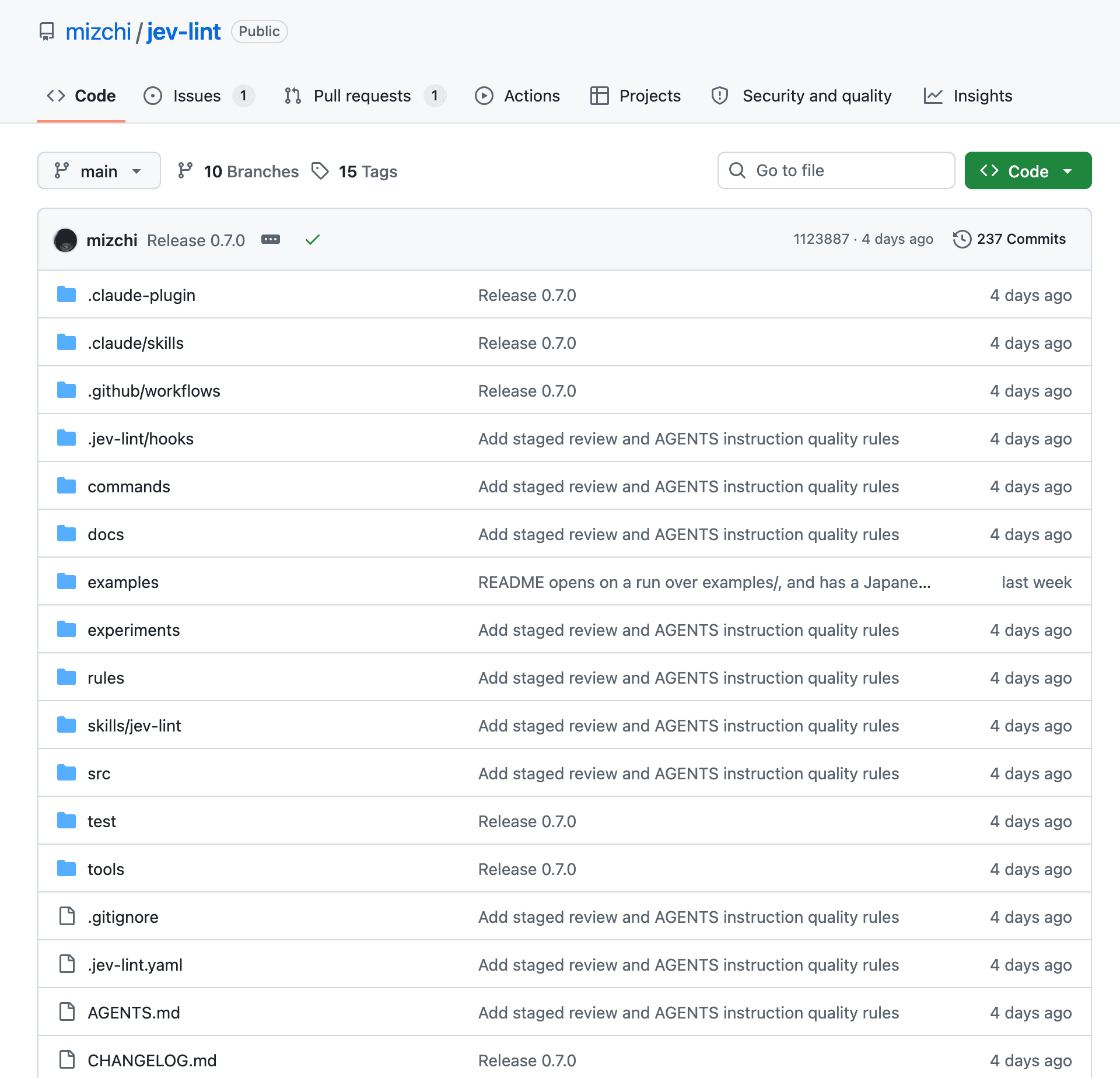
Each jev-lint rule is one plain sentence, such as the comment above this code claims something that is not true of the code. A code matcher picks which pieces of code to look at, and Jev is asked that sentence about each match, answering with a probability rather than a wall of text.
Nearly a hundred rules ship, covering names against what they do, comments and error promises against the body, tests against what they claim, quiet failures, shell scripts that do more than they show, and whether a document reads as filler. Newer versions add checks on commit messages and on whether a repository's own instruction files are clear.
It runs from the command line with npx and your own Jev key. The code being judged is sent to the Jev service, and the README puts a real cost on a run, about a tenth of a cent for its six-finding example.
What you get
- Full TypeScript source code under the MIT license
- Ninety-nine ready-made rules for TypeScript, Rust, Python, Go and Markdown, plus a Japanese README
- Notes on what a run costs and a Claude plugin and skill to use it from an agent


 Jev
 TypeScript
 Node.js
 Claude Code
 Codex